Ethopabate API Manufacturers and Suppliers in India
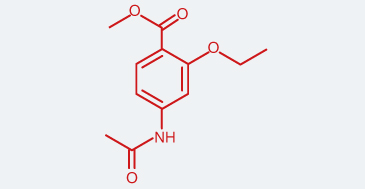
Ethopabate is a veterinary anticoccidial used in poultry feed, almost always together with amprolium, to prevent coccidiosis in broiler and replacement chickens. Bio-Synth manufactures ethopabate in BP (Vet) and USP grades at its plant in Balanagar, Hyderabad. It is a white or pinkish-white powder, very slightly soluble in water and soluble in chloroform and methanol.
Contact Us
Product Description
Generic name: Ethopabate (Vet) BP / USP
Chemical name: Methyl 4-acetamido-2-ethoxybenzoate
CAS number: 59-06-3
Molecular formula: C12H15NO4
Molecular weight: 237.25 g/mol
Category: Veterinary API and feed additive (anticoccidial)
Form and colour: White or pinkish-white powder
Solubility: Very slightly soluble in water; soluble in chloroform and methanol; sparingly soluble in ethanol (96%); slightly soluble in ether
Storage: Well-closed containers, protected from light
Packing: As per requirement
Synonyms: Ethyl pabate; methyl 4-(acetylamino)-2-ethoxybenzoate; 4-acetamido-2-ethoxybenzoic acid methyl ester
Ethopabate API Specification
Test | Limit |
Assay (on dried basis) | 96% to 101% w/w |
Melting range | 148.4-149.2 deg C |
Loss on drying | Not more than 1.0% w/w |
Any other impurity | Not more than 1.0% |
Total impurities | Not more than 2.0% |
Ethopabate API Manufacturers in India
Bio-Synth has made APIs in Hyderabad since 1943 and works under drug manufacturing licence 118/HD/AP/96/B/R. The company has manufactured ethopabate for almost four decades.
Ethopabate is one of four Bio-Synth APIs that trace back to 4-aminosalicylic acid (PAS), along with aminosalicylate sodium, metoclopramide and amisulpride. The company’s advanced drug intermediates list shows PAS as the intermediate for all four. From PAS, three stages give ethopabate: the amino group is acetylated, the acid is converted to its methyl ester, and the 2-hydroxy group is ethylated.
That matters for a premix maker in one practical way. When the starting material comes off the same site, a change in its process goes through Bio-Synth’s change control before it can reach ethopabate, rather than arriving unannounced from an outside vendor.
Ethopabate API Suppliers in India
Ethopabate is bought by premix and feed-additive manufacturers making amprolium-ethopabate products. Three things speed up a quotation:
- Grade. State which pharmacopoeia your product licence references, BP (Vet) or USP. The two monographs are not interchangeable on paper, even for the same molecule.
- Quantity and schedule. Ethopabate goes into feed at grams per tonne, so a steady call-off plan often fits premix production better than one large order.
- Destination. Export markets for veterinary products set their own import paperwork, so say where the premix will be sold.
Every dispatch carries its batch CoA.
For the wider picture of how APIs move from synthesis to release, see the overview of the API manufacturing process.
Ethopabate API Price in India
Bio-Synth quotes ethopabate per order rather than publishing a price. What moves the number:
- Grade. BP (Vet) and USP material are tested against different monographs.
- Volume. Larger or scheduled call-offs price better than one-off lots.
- Packing and labeling. Non-standard pack sizes or customer labelling add cost.
- Export documentation. Some veterinary markets ask for more paperwork than a domestic sale.
Keep the cost in proportion. At 3.6 to 36.3 g of ethopabate per ton of feed, the API is a small part of what a finished premix costs, and a failed assay or a late delivery usually costs more than the gap between two quotes.
Quality and Compliance
- ISO 9001:2015. Certified by DNV Business Assurance (UKAS accredited), certificate 156792-2014-AQ-IND-UKAS, with initial certification on 20 August 2002. The scope covers “Development, manufacture and sale of active pharmaceutical ingredients (APIs), drug intermediates, biological products & liver injectable”.
- WHO-GMP. The site holds WHO-GMP certificate L.Dis.No. 150458/TS/2024 from the Drugs Control Administration, Government of Telangana, valid until 5 June 2027 for select products.
- ICH Q7. ICH Q7 is written for APIs used in human medicines. Bio-Synth makes ethopabate under the same GMP system, which runs in line with ICH Q7 principles, rather than a separate veterinary standard.
- Release. QC releases each lot against the ordered monograph with a CoA. More on how Bio-Synth runs quality control and GMP is on the quality page.
- Standards background. A separate summary of API regulations and standards explains how GMP, WHO and pharmacopoeial rules fit together.
How Ethopabate Works and Where It Is Used
Ethopabate is a structural analogue of para-aminobenzoic acid (PABA). It competes with PABA in the folate synthesis pathway of Eimeria, the protozoan parasites behind coccidiosis, and so starves them of the folate they need to multiply. It is not an antibiotic and is not used for bacterial infections.
Its activity is strongest against the intestinal species E. acervulina, E. maxima and E. brunetti and weak against the caecal species E. tenella. That gap is why it is paired with amprolium, which is active against E. tenella. US feed-additive rules (21 CFR 558.58) list ethopabate only in combination with amprolium: 113.5 g of amprolium with 3.6 g of ethopabate per ton of feed, or with 36.3 g of ethopabate per ton where E. acervulina, E. maxima and E. brunetti are likely.
Ethopabate API FAQs
We are listening.
We believe that the heart of dialogue is listening.Please write in your queries and we will get back to you.
Ethopabate is used in poultry feed to prevent coccidiosis, a parasitic disease of the chicken gut. It is almost always combined with amprolium in premixes for broiler and replacement chickens.
The two drugs cover different Eimeria species. Ethopabate is most active against E. acervulina, E. maxima and E. brunetti but weak against E. tenella, which amprolium controls. Together they cover a wider range of species than either drug alone.
No. Ethopabate is an anticoccidial. It blocks folate synthesis in Eimeria parasites by competing with para-aminobenzoic acid, and it is not used to treat bacterial infections.
The CAS number of ethopabate is 59-06-3. Its chemical name is methyl 4-acetamido-2-ethoxybenzoate, with molecular formula C12H15NO4 and molecular weight 237.25 g/mol.
Bio-Synth supplies ethopabate in BP (Vet) and USP grades. State which pharmacopoeia your product licence references and the quotation will be made against that monograph.
Ethopabate (CAS 59-06-3) has an ethoxy group at the 2-position and is the anticoccidial API. Methopabate (CAS 4093-29-2) has a methoxy group there and is used as an intermediate for metoclopramide.
Each batch ships with its Certificate of Analysis against the ordered monograph. Share your destination market when you enquire so any further documents it requires can be agreed.
Request a Quotation
Share the grade (BP Vet or USP), the quantity, your preferred call-off schedule and the market where your premix will be sold. Send the details through the contact page and the team will reply with a specification, a recent CoA and a quotation.
Ethopabate sits alongside amisulpride, metoclopramide and aminosalicylate sodium in the Bio-Synth API portfolio.
How the company grew from its 1943 start is told in Bio-Synth’s story.